From its ancient origins in Kedah, to its rise in the global economy, Penang is a living natural and cultural experience of diverse flora and fauna, ethnic diasporas, and hybridity. It has layers of indigenous history which has produced a cosmopolitan society of Malays, Chinese, Indians, Jawi and Arab Peranakan, Straits Chinese, and expatriates. Penangites who choose to live or run an enterprise in a UNESCO World Heritage City understand this and have developed a peaceful eclectic cultural co-existence with others.
Penang’s heritage experience is holistic and comprehensive; an appreciation of pristine flora and fauna, architectural and interior design, material and culinary culture, with enterprises which reflect Malaysian traditions past and present. Hence, amidst the hustle and bustle of modern city life is a vibrant narrative waiting to be told. Here is the narrative of what makes it so different from other soulless modern states.
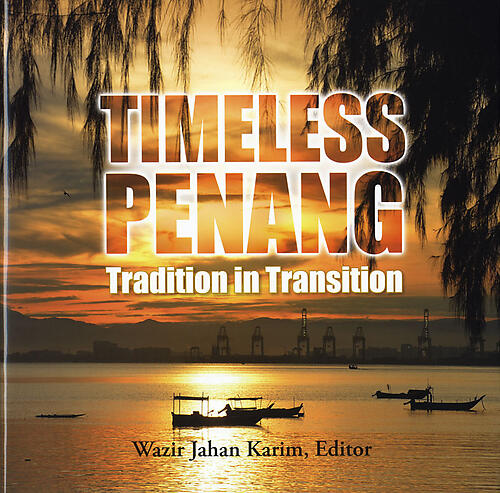
This book presents Penang’s biodiversity, economic vibrancy, and living heritage as a thriving cosmopolitan global community. Embedded in centuries of maritime history, dating back to the pre-history of the Kedah Sultanate to present times, it provides an illustrious description of Penang’s ethno-political and ecological landscape, built heritage, and creative industry.
Transformed into a global economy long before European conquest of the region, Penang’s socio-cultural history thrives as a living heritage, where its biodiversity and multi-culturalism address a pressing issue of economic sustainability in modern times. The rediscovery of George Town as a UNESCO World Heritage City in 2008, and the granting of Penang Hill and its forest and ocean reserves as a UNESCO Biosphere in 2021, is testimony to the State’s efforts to uphold a sustainable ecology and environment for the people in the present and future.
Penang has more than texture, taste, and talent; it constantly eludes by redefining its socio-cultural boundaries to be inclusive of a global community wishing to discover or retire on a tropical island. Although its original socio-economic and cultural geography has been transformed, such transformation have retained the genome of its origins which remain to be unfolded, revisited, and deconstructed through entrepreneurs, travellers, artisans, and writers.