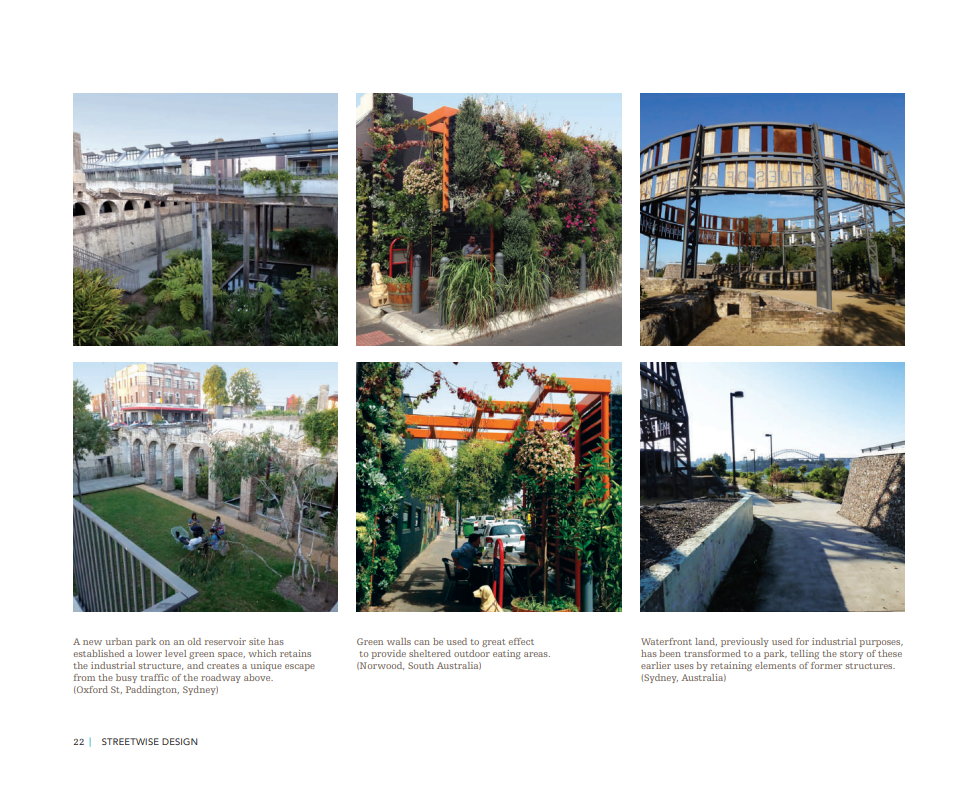
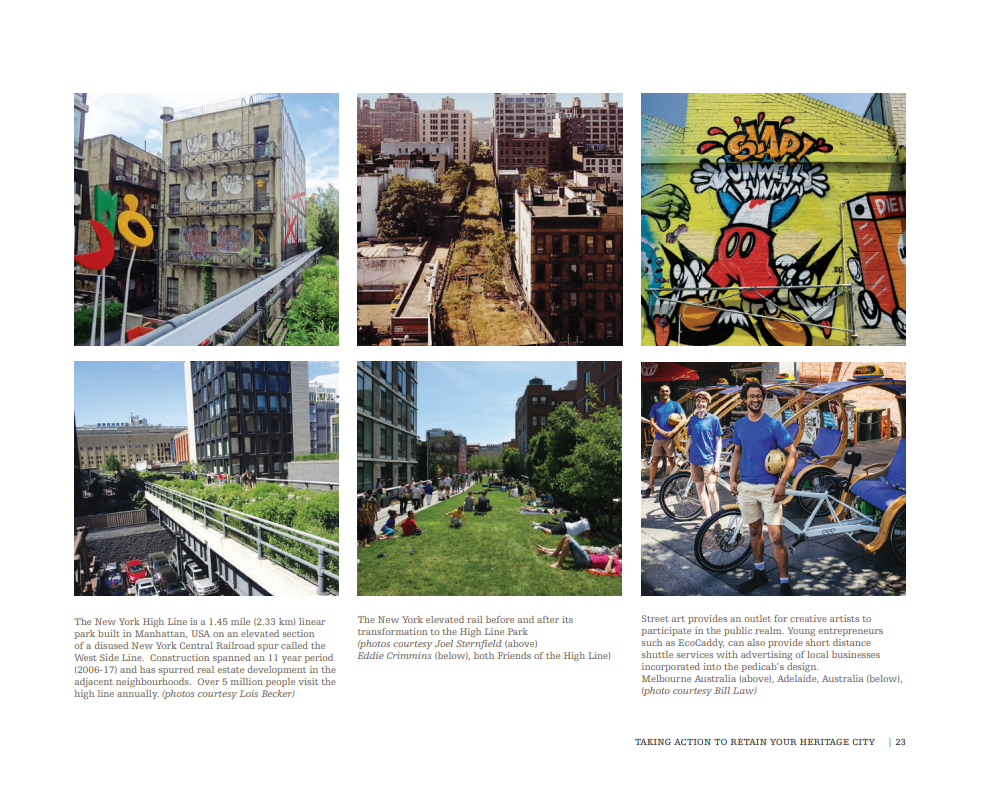
Successful conservation in the urban environment relies on a shared understanding of the basic processes and tools available to assist in this work. In this book, Streetwise Design and Australian architect and heritage practitioner Elizabeth Vines takes the reader through the key ingredients for successful local management.
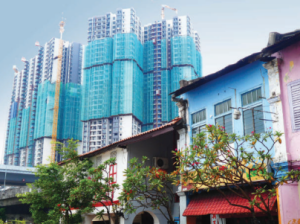
Large high-rise developments on consolidated land holdings occurs at a completely different and often jarring scale to the existing streetscape (Johor Bahru, Malaysia).
Photo and text courtesy of the author.
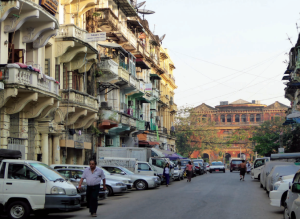
Photo courtesy of the author.
Contents
FOREWORD
AUTHOR’S NOTE AND ACKNOWLEDGEMENTS
GLOSSARY OF TERMS
1 INTRODUCTION
2 WHAT IS A LIVEABLE HERITAGE CITY OR NEIGHBOURHOOD?
3 SIGNIFICANCE AND AUTHENTICITY OF PLACE
4 TAKING ACTION TO RETAIN YOUR HERITAGE CITY OR NEIGHBOURHOOD
▸Broad Sustainability Goals
▸Public Realm Strategies
▸Visionary Heritage Strategies and Historic Urban Landscape (HUL)
▸Cultural Mapping and Community Consultation
▸Conservation and New Development Guidelines
▸Conservation Management Plans
▸Heritage Impact Assessments
▸Incentives for Heritage Conservation
▸Interpretation, Public and Street Art Programs
5 DESIGN PRINCIPLES FOR INFILL DEVELOPMENT
6 DESIGN PRINCIPLES FOR ADAPTIVE REUSE
7 CHECKLIST FOR STREETWISE DESIGN
BIBLIOGRAPHY AND FURTHER READING
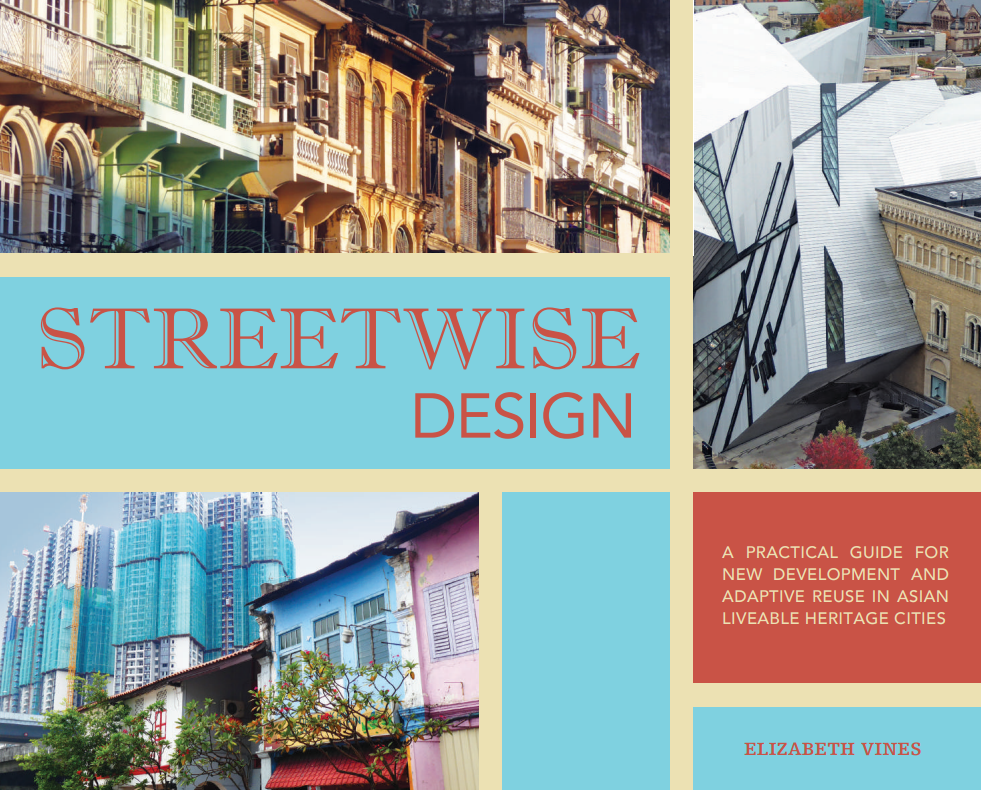
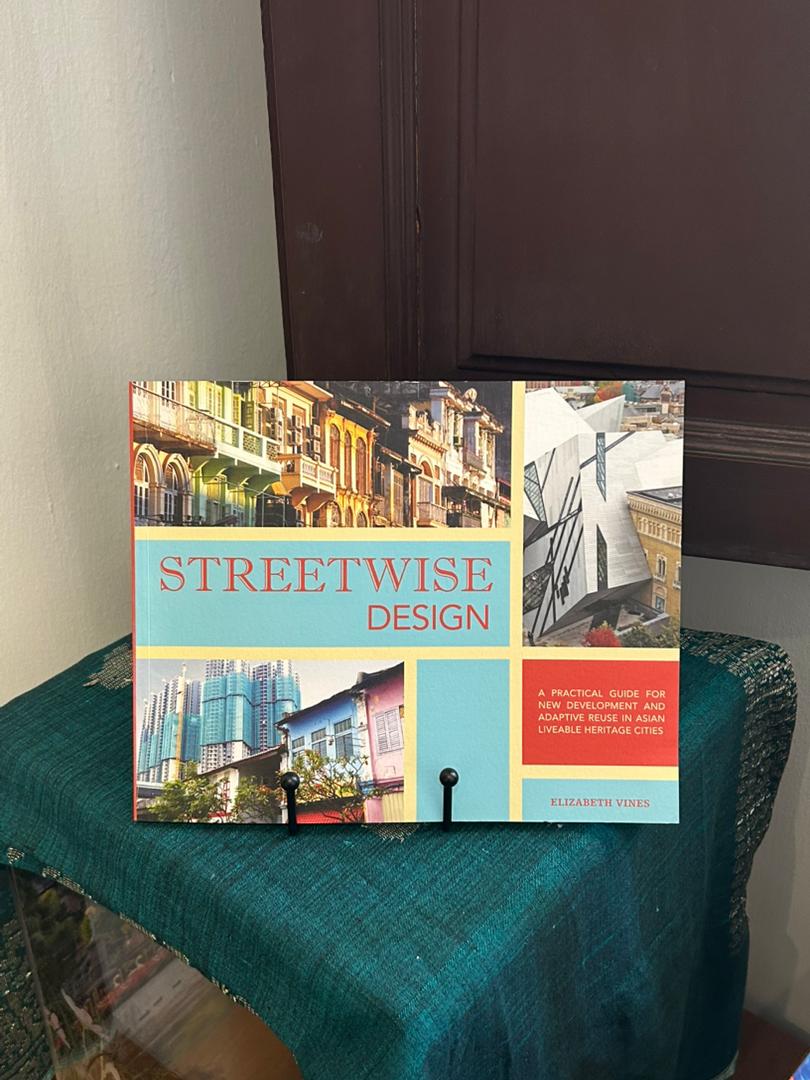
Front cover images – clockwise from top, Yangon, Myanmar; Toronto, Canada; Johor Bahru, Malaysia
Back cover image – Pyay, Myanmar
About The Author
Elizabeth Vines, from Adelaide Australia, is an award winning conservation architect, who over her 40 year architectural career has advised to a wide range of government agencies, local councils and private clients. Elizabeth is a passionate advocate for heritage conservation issues and has worked throughout Australia and Asia on a variety of projects as well as teaching which she now considers an important part of sharing her experience. She is a past President of Australia ICOMOS (2012 – 2015), visiting Professor at Hong Kong University, and an Adjunct Professor at the Cultural Heritage and Museum Studies, Deakin University, Melbourne, Australia. She studied architecture at Melbourne University and Carleton University, Ottawa, Canada. Her 30 year conservation architecture practice, McDougall & Vines, has undertaken a wide variety of projects often in challenging circumstances, negotiating and facilitating good conservation outcomes. She also worked for 30 years in Broken Hill (in outback Australia), a city dear to her heart where her legacy of practical conservation is very evident. She was a visiting Getty Scholar in Los Angeles in 2016 and in June 2009 was awarded the Medal of the Order of Australia for Services to Heritage Architecture.