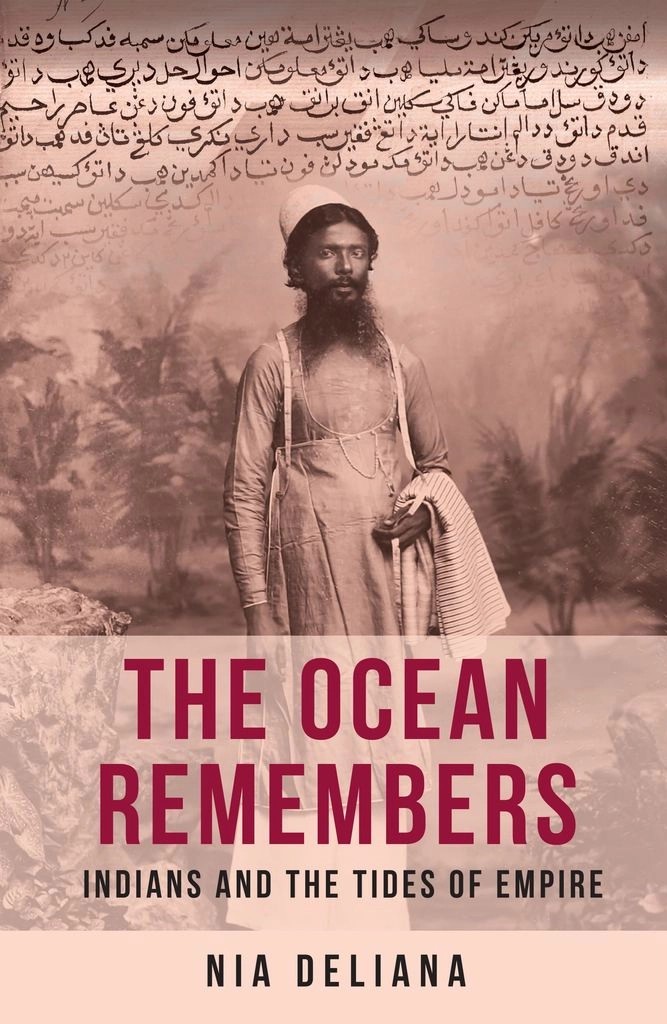
The Kelings were more than just powerful merchants who connected continents and oceans long before Marco Polo set sail. So how did their identity become an insult?
For centuries before European colonialism, the Indian Ocean and the Indo-Malay Archipelago were a vibrant world of its own, linked by a dynamic community known as the Kelings. They were indispensable nodes in the sophisticated Muslim economic world system. Their networks of trade and culture made Southeast Asia a crucial hub in the global economy as an influential centre.
The book uncovers their forgotten history. It’s a journey that traces how the term Keling transformed from a neutral, even respected, identifier into a racial slur. From the 14th to the 19th centuries, you will follow the Keling people’s journeys, explore their networks, and discover how their legacy was systematically narrowed and obscured by later narratives.
This is more than a history of a word. It is a reclaiming of a global legacy. It challenges everything you thought you knew about the world of the Indian Ocean and the Archipelago, inviting readers to discover a community whose influence shaped continents and whose story has been waiting centuries to be told.
***
A compelling analysis of the Keling merchants of the eighteenth and nineteenth centuries. Drawing on robust archival research, this book offers valuable insight into indigenous Indo-Malay trade networks and interracial dynamics, including offering critical insight into the role of Islam in these relations. The study disrupts eurocentric lenses by centring indigenous experiences over European colonial perspectives even as it addresses the European role in the racialised dehumanisation of Keling communities. Deliana’s work is a valuable contribution to Indian Ocean studies.
Lubaaba al Azami
Queen Mary University of London,
Author of Travellers in the Golden Realm:
How Mughal India Connected England to the World (2025).
Nia Deliana’s work centralises Keling seafarers as commercial agents who forged enduring mercantile networks between India and Southeast Asia. In an age of cultural fluidity, Muslim Keling traders brought this maritime exchange of spices, textiles, and other valuable commodities to new heights as Islam spread throughout the region. Once Europeans began encroaching on the Kelings’ trade and territory, the ancient “Kalinga Sagar” was renamed the “Bay of Bengal”. With the reification of imperial racial hierarchies based on skin colour, “Kling” was reduced to a slur for dark-skinned subalterns, particularly indentured South Indian labour. Armed with meticulously researched evidence, she boldly challenges the inherited prejudices and colonial cultural erasure that continue to obscure the Kelings’ historical identity and remarkable legacy.
Khoo Salma Nasution
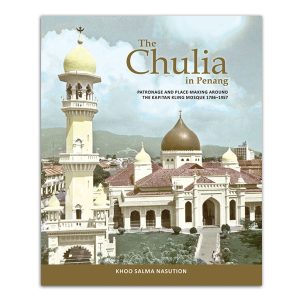
Author, Chulia in Penang: Patronage and Place Making
Around the Kapitan Keling 1786-1957
In recent years, the term keling has become a racial slur in Malaysia and Singapore, primarily mobilised in digital hate speech. However, study, supported by many overlooked historical primary sources, as Nia Deliana forcefully demonstrates in this richly documented the Kelings played an important role in shaping the cultures In this well-researched book with a focus on the 18th and 19th insular Southeast Asia. This scholarly work sets history straight. centuries, its author does justice to the obscured history of Indian merchants and their descendants in the Malay-speaking archipelago. Importantly, Nia Deliana also highlights contentious processes of racial identity construction since 19th-century European colonialism when Keling economic power declined and keling first began to become a derogatory word. This is a must-read on a long-forgotten narrative, dealing with issues of mobilities, belonging, exclusion, and representational omissions.
Edwin P. Wieringa
Institute of Languages and Cultures of the Islamicate World,
University of Cologne, Germany.
About the Author
Nia Deliana is an Indonesian scholar whose personal history deeply shapes her work. Growing up in Aceh during the long period of civil unrest gave her firsthand appreciation for resilience and the power of community.
She earned her PhD in history from the International Islamic University of Malaysia and now teaches Politics and International Relations at Universitas Islam Internasional Indonesia. Her research has allowed her to connect with global academic communities, sharing her work in countries such as Malaysia, Philippines, Singapore, India, Iran, Turkey, and the UK. Her writing has found home in respected international outlets like Brill, the University of Hawai’i Press, The Diplomat, The Politics Today, as well as Indonesian publications, allowing her to contribute to a broader conversation on global affairs.
Prior to an academic career, Deliana was long committed to humanitarian service, dedicating more than a decade to cultural diplomacy, conflict resolution, and disaster relief efforts.