
PREFACE
Both the 10th Malaysia Plan (2011-2015) and the National Physical Plan 2 (NPP-2) recognise that to avoid getting caught in the middle income trap Malaysia must undergo a transformation towards a Knowledge-Economy.
Innovation, improved productivity, ‘agglomeration economies’ and more liveable cities that attract talent are central features of this development agenda. By 2020 it is estimated that more than 70% of the nation’s population will reside in urban areas. To make the most of the opportunities and overcome the challenges presented by urbanisation, the 10th Malaysia Plan advocates concentrated urban development into five conurbations; namely Kuala Lumpur, Johor Bahru, George Town, Kuantan and Kota Kinabalu.
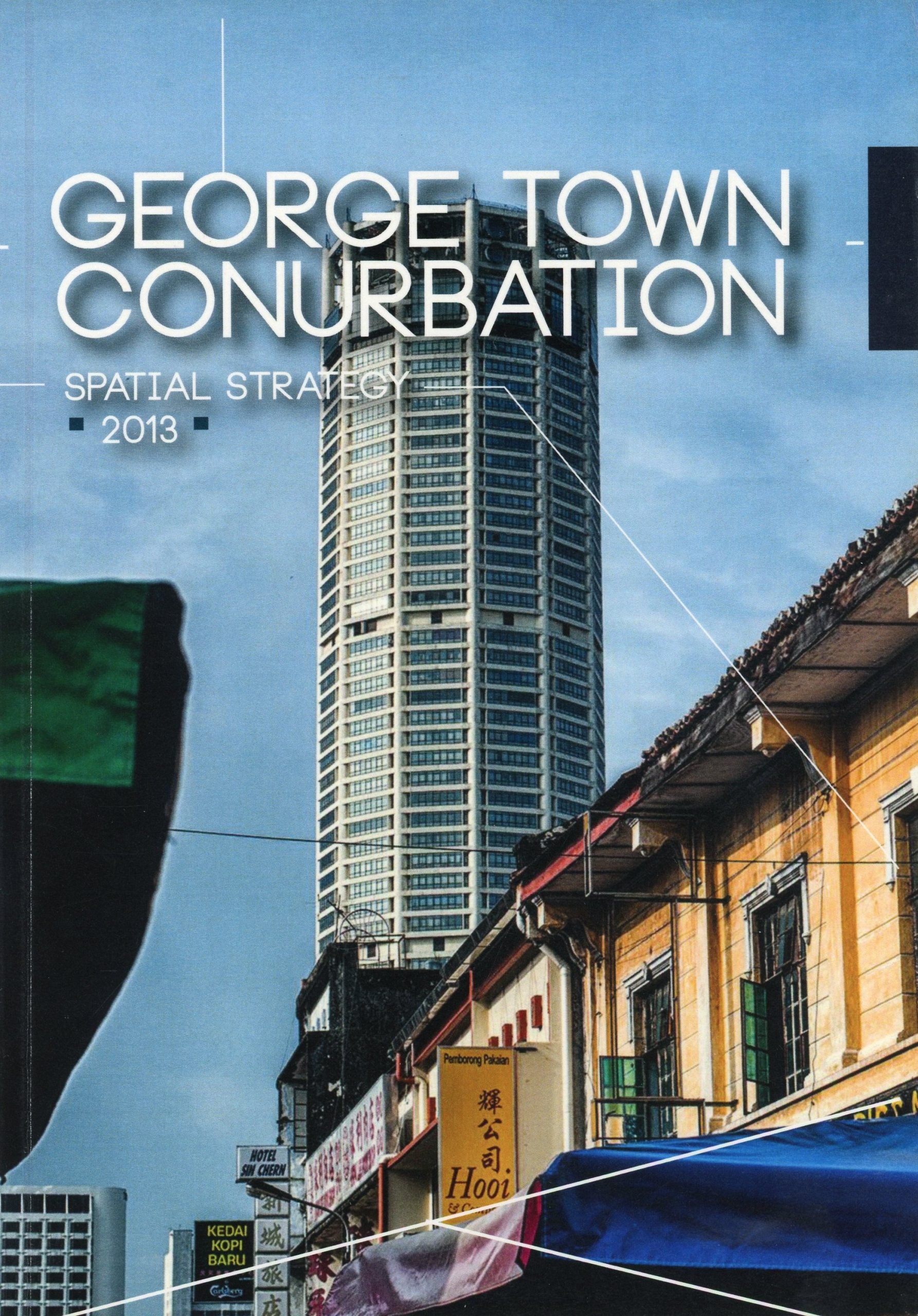
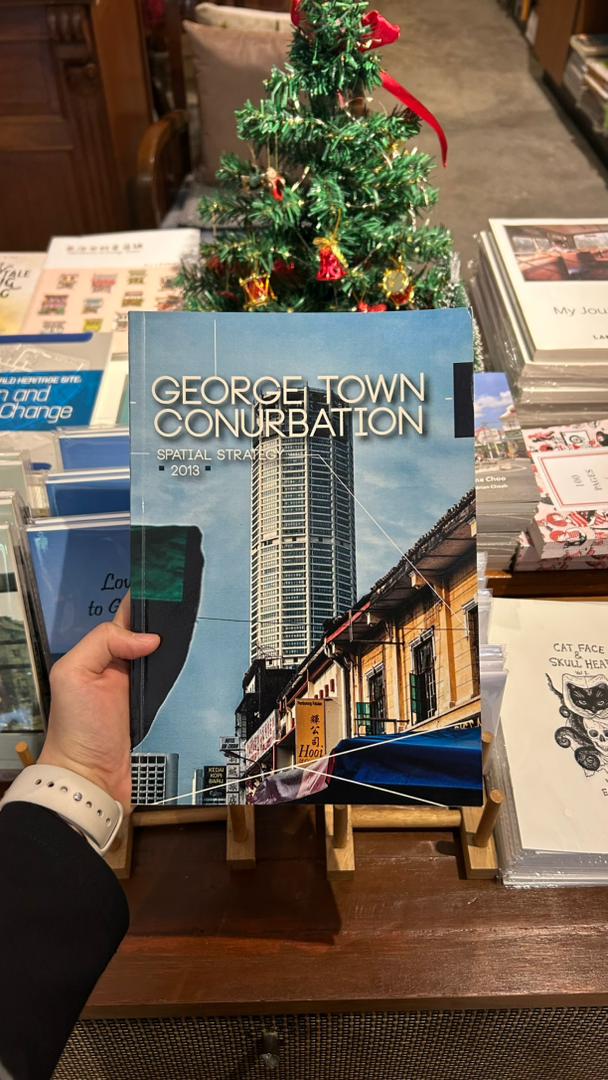
This Spatial Strategy has been prepared to provide a more detailed planning framework for the George Town Conurbation. To meet its articulated objectives it should be implemented in parallel to other key economic and social planning documents. In addition to the 10th Malaysia Plan and NPP-2, other documents of note include work done by Khazanah Nasional such as (i) George Town Transformation Programme (GTTP), (ii) Sustainable Penang Initiative 2 (iii) Cities, People and The Economy: A Study on Positioning Penang and (iv) The Penang Project. The GTTP provides insights on methods to transform George Town into a 21st century city that will be able to attract and retain talent. Sustainable Penang 2 discusses approaches on consensus building and community engagement towards building a sustainable and liveable Penang. Cities, People and the Economy articulates a new growth strategy for the George Town Conurbation which amongst others, identifies policy instruments to avoid the middle income trap. The Penang Project, which was prepared after the initial GTC Spatial Strategy provides detailed analysis of Penang’s spatial form and advocates a Network City Model kick started by a number of key amenity and connectivity improvements.
The George Town Conurbation Spatial Strategy builds on this work and seeks to facilitate a transition to a high income economy through the development of an appropriate spatial form. It describes a move to a spatial form where development is concentrated into nodes, rather than allowed to continue to sprawl; land use and transport planning is coordinated and integrated; and planning leads to, rather than responds to, change. This spatial model is to be based on a nested hierarchy of specialized nodes in which urbanization is concentrated, linkages between them enhanced and existing agriculture and manufacturing land are improved and retained. This can be done by improving the functionality of the geographical space through better amenity and connectivity as well as retaining and attracting knowledge based skills and firms within the Conurbation. The development of the spatial form is to be supported by an improved planning/design institutional framework and delivery system.
Dr. Matt Benson and Dr. Kevin Johnson from Geografia (an Australian-based company specializing in social and economic planning) were commissioned by Think City Sdn. Bhd. (TCSB) in 2010 to prepare this study. They were recommissioned in 2013 to provide an update. The findings were discussed with key stakeholders in the region namely Jabatan Perancang Bandar Dan Desa (JPBD), Negeri Pulau Pinang, Negeri Kedah, Negeri Perak, Majlis Perbandaran Seberang Prai (MPSP), Majlis Perbandaran Pulau Pinang (MPPP), Northern Corridor Initiative Agency (NCIA), University Science Malaysia (USM) and SERI/Penang Institute. The initial and revised report was circulated to all stakeholders for comment. Formal comments were also taken from Professor Emeritus (Universiti Malaya) Ezrin Arbi and Dato’ Dr. Goh Ban Lee (SERI).
TABLE OF CONTENTS
Preface
Overview
1.0 Introduction
1.1 Background
1.2 A Snapshot of the George Town Conurbation
1.2 What is a Spatial Strategy
2.0 GTC in the Regional and Global Context
2.1 Globalisation, Reginalisation and Cities
2.2 The GTC’s New Regional Context
3.0 The Policy Operating Environment
3.1 10th Malaysia Plan 2011-2015
3.2 New Economic Model
3.3 National Physical Plan 2
3.4 The Indonesia Malaysia Thailand Growth Triangle (IMT-GT)
3.5 Northern Corridor Economic Region Blueprint
3.6 Penang Structure Plan
3.7 George Town Transformation Programme
3.8 Penang Local Plan
3.9 Penang Transport Master Plan 2013
3.10 Penang Project
3.11 Shared Goals and Objectives
4.0 Issues and Risks
4.1 Overview
4.2 Increasing Costs – Declining Competitiveness
4.3 Declining Connectivity and Amenity
4.4 Summary
5.0 Repositioning the GTC – Challenges Ahead
5.1 Overview
5.2 Repositioning the GTC
5.3 The Spatial and Planning Framework
6.0 Solution Framework
6.1 Planning Principle
6.2 Spatial Models
6.3 The Preferred GTC Spatial Framework
7.0 Spatial Strategy Implementation
7.1 Goals and Objectives
7.2 Actions
7.3 Concluding Remarks
8.0 References