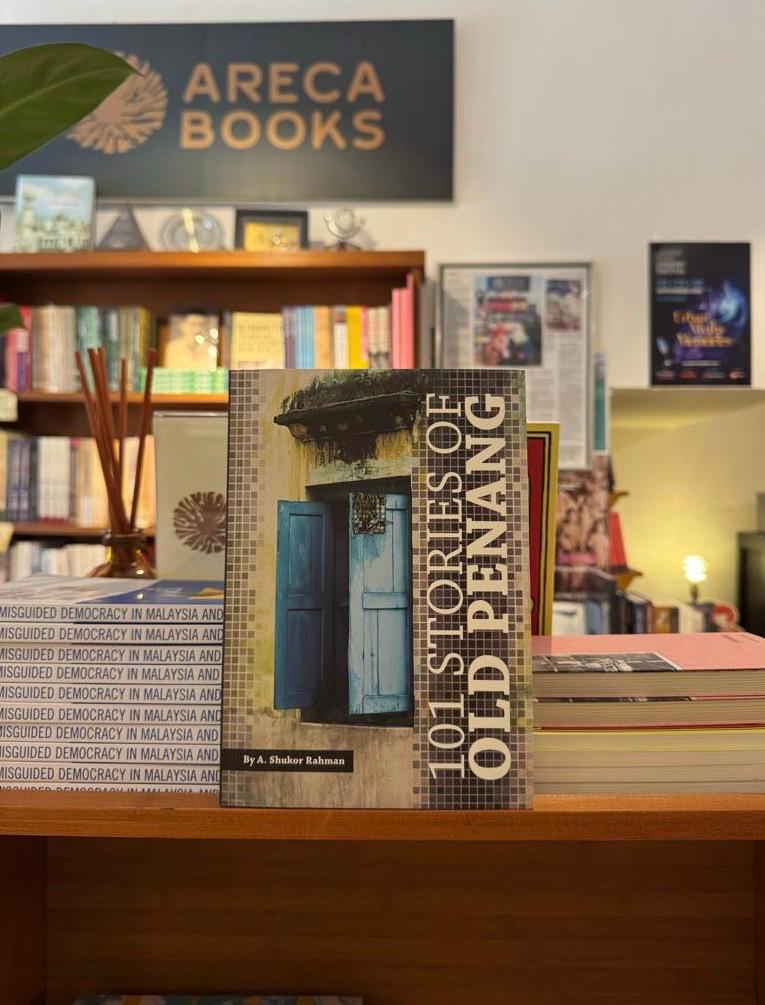
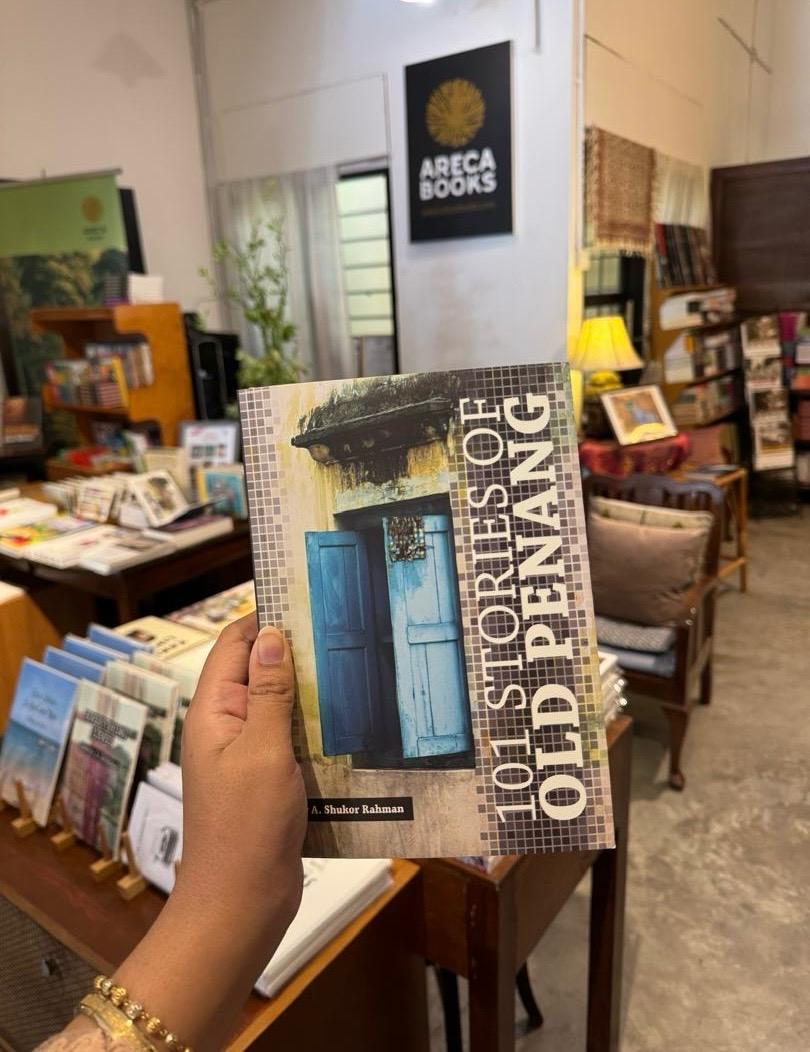
Penang has undergone tremendous change over the last few decades, and tradition is fast losing out to transformation. The pace has picked up considerably leaving little of the state’s rich heritage legacy.
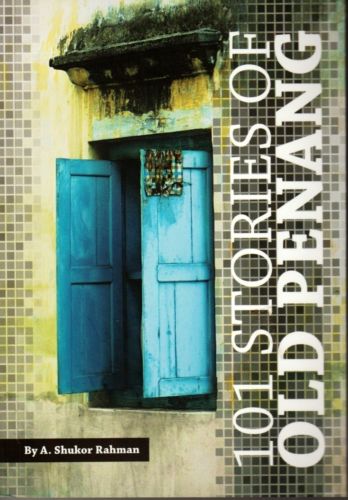
This book is a collection of short stories that celebrates old Penang, and the people who helped her on this journey that make her special. In this collage of essays and interviews, A. Shukor Rahman gives these stories a special perspective that only a journalist with vast experience and familiarity of the state can.
His gives a rare and refreshing insight from interviews with people who knew the old Penang – stories that range from the bygone era of traditional villages, to when Province Wellesley exported elephants to India, and when tigers ruled the mainland. This book captures the essence of old Penang in a kaleidoscope of stories featuring the state’s fascinating places, buildings and people.
“This book by A. Shukor Rahman, whose professional adult life for over four decades was as a journalist and passionate Penangite, adds value to many of those gems of small places and stories that have made Penang so especially enchanting.”
Dato’ Dr. Anwar Fazal, Chairman, Think City
About the Author
Retired journalist A. Shukor Rahman was born in Penang on March 7, 1949. He had a diverse childhood education at the Datuk Keramat Malay School, Wellesley Primary School and Francis Light School before moving to the Penang Free School where he studied from 1962-68.
Blessed with a keen memory, he remembers a lot of Penang in the 1950s and early 1960s, as his father often took the family out on daily evening drives in their Hillman Saloon around the island. Places such as Tanjung Tokong, Tanjung Bunga, Batu Feringgi, Bayan Lepas, Balik Pulau, the Botanical Gardens, Esplanade and Persiaran Gurney were favourite haunts for the family. The writer also benefitted from riding pillion on his father’s trusty BSA motorcycle on round island trips, going as far as to Alor Setar.
On Sunday afternoons, he recalls frolicking in the sea off the New Springtide Hotel in Tanjung Bunga with baby catfish for company. Such sessions would be followed by sumptuous egg sandwiches accompanied by pots of coffee and tea. Other Tanjung Bunga stops included the Cameron Restaurant (which served lip-smacking prawn fritters and beef steaks), Sin Hai Keng, Garden Restaurant and TV Templeton’s Mount Pleasure Resort. Adding colour to the scene, some Kelantan fishermen would occupy part of the beach near the Cameron Restaurant and Sin Hai Keng to avoid the northeast monsoon. They would sit serenely repairing their nets and boats on Sunday mornings – all to the accompaniment of loud music from their transistor radios.
On such afternoons, a British Army band (possibly the Manchester Regiment) looking resplendent in their white tunics and black trousers, On such afternoons, a British Army band (possibly the Manchester would perform at the Botanical Gardens to packed crowds. Shukor remembers the Shanghai Hotel and its spacious grounds in Gurney Drive as another favourite spot to enjoy snacks such as satay, mee and cuttlefish only two small hotels in Batu Feringgi; namely, The Lone Pine and Golden as one relaxed with the soothing sea breeze. At the time, he remembers Sands (nothing to do with the precentst Golden Sands Resort). Also relished here were gob-smacking egg sandwiches and pots of coffee and
tea, prepared as only the Hainanese cooks knew how to.
Other notable eateries in George Town were Wing Look in Penang Road and its rival, Kuan Lok at the junction of Burma Road and Transfer Road, as well as Tip Top in Pulau Tikus near the police station. Throughout the 1950s, a lot of people depended on the bicycle to go about and so, there were numerous cycle parks near cinemas and the City Stadium. The New World Amusement Park was a popular entertainment attraction until the mid-1960s, when it began to fade away from a lack of live shows. Cheap movie matinees with an admission price of 50 cents per patron were popular, especially if they were showing action movies or Westerns.
In those days, traffic jams were unheard of and motorists usually drove around in a relaxed manner along Gurney Drive and the Esplanade, a practice many locals affectionately called ‘makan angin’. Even good old Green Lane, now known as Jalan Masjid Negeri, would turn quiet and peaceful after 6pm. There was usually no problem finding a parking space in George Town, unlike today.
As a student, the author recalls camping on the beach at Teluk Bahang, and was especially fond of the former Jubilee Camp. Now, with rapid development taking place there, there will soon be nothing but memories left. As for Seberang Perai, few islanders used to give two hoots about it in the old days – unlike today.
Shukor joined The Straits Times in 1971 and became the London correspondent three years later. He completed a diploma course at London School of Journalism and attended a management course at the British Industrial Society. He has been bureau chief in Kota Bharu, Alor Setar and Penang and held several posts, such as assistant news editor, sub-editor, feature writer and specialist writer, before retiring in 2005.
His other books include Some Spice, Some Vice, Memori Perjalanan, Moonlight on the Water, Flying Colours of Tanjung, A Shared Destiny and PEMENANG’S 87th Anniversary Souvenir Issue.